
Archives for 2008
Cute
Lowering the bar
Brigitte posted recently on U.K.’s bid to lower the gestational age limit on abortion from 24 to 20 weeks in light of improved outcomes for extremely premature infants. An accompanying piece to the Telegraph’s article featured a toddler born at 23 weeks gestation and his mother commenting on the proposed revised guidelines.
Now, I want to be very careful in critiquing an effort that would no doubt reduce the number of abortions performed. That being said, my area of specialty in bioethics is neonatal ethics. I’ve seen enough infants born at 23 weeks gestation to last me a lifetime and while I support making every reasonable effort to support them medically while they grow enough lung and brain tissue to make it in the big wide world, I’m not sure I understand why abortion should be prevented with more gusto when it targets a viable fetus. My objection is philosophical: abortion cannot be half-right or half-wrong. Either the fetus is human or it’s not. You have to take the life of a viable fetus just as much as a non-viable one. That being said, I can grasp – if I don’t completely buy it – the moral basis of this partial ban on abortion. Infants who are completely dependant on their mothers for survival can be dispatched by the mother. When they become independently viable they should no longer be considered the property of their mother.
But let’s not fool ourselves here, “viability” when applied to a 23-weeker is a loaded term. Infants that young are not viable without the help of a truck-load of expensive equipment, 1-on-1 nursing care and a team of highly trained pediatricians. In many cases, this is not enough to save very premature infants and in another many cases, life-saving treatments can themselves cause severe impairments.
I think that what makes me so uneasy with this initiative, despite its positive aspects, is its potential to “de-dramatize” the abortion of non-viable fetuses, particularly in the eyes of the silent majority who oppose abortion but abhor judging those who get one even more. It seems that by lowering the gestational limit on abortion, we have found a way to make abortion both right and wrong. By making the buck stop at an arbitrarily set date, we numb ourselves to the reality of abortion with the balm of feeling like we actually did something about it.
_________________________
Brigitte feels like quibbling: Point nicely made and taken about the danger of de-dramatizing early abortion. Though in this country it could hardly be less dramatized… The thing about arbitrary limits is that there is a point after which the state will not tolerate so-called lifestyle abortions because these are considered worse by public opinion than those performed at, say, 8 weeks, when the embryo looks like something out of a sci-fi movie. Likewise, why is it that sentences are more severe for someone convicted of first-degree murder than they are for any other form of homicide? Because the law, reflecting public opinion, considers first-degree murder worse. It’s far from perfect, as a system. But it has the virtue of being legitimate.
_____________________________

Andrea adds: I started this group because public opinion must and indeed can change. There is nothing better or worse about an abortion at 23 weeks than at eight weeks–that small person only now looks more like he or she will when born. The law is not effective here and surely the law in the UK is worse than no law at all. Sure, it reflects public opinion and therefore the gruesome dismembering limb from limb of babies at 23 weeks is more repugnant to many than an early term abortion. But not to me, it isn’t.
When I was little, I loved going on frog and toad hunts. There was something amazing to me about these tiny creatures in the woods. There still is. I would (most unfortunately) go to any length to catch one, so I could look at it in my hand. (This changed at least a little when I fell into a stinky swamp.)
If we cared about people in the same manner as we do about small toads in the environment… if we held the developing embryo in awe, as I do these tiny toads–we would all oppose abortion fully at any time after those cells began rapidly multiplying, knowing that all genetic material is in place from conception onwards for a whole new person to live and thrive.
I believe we can make people care about embryos and should strive for nothing less.
________________________________
Rebecca adds: I’m not sure I agree that the law in the UK is worse than no law at all. While I don’t see the law as the best way to stop abortion, laws (especially those with popular support) express the collective opinion of the people. I would rather Canadians express the opinion that abortions after 24 weeks, or 20 weeks, are unacceptable, than our current iteration, which is that anything goes if you can find a doctor willing to do it.
I also find it surprising how few Canadians are aware of how extreme our legal position on abortion is – the thoroughly secularized western European states are all much less permissive than we are. Then again, given that there are literally no restrictions on abortion in Canada, that’s not saying much.
________________________________
Andrea clarifies: I worry about that portion of the population that looks to the law as a teacher. And then says: If abortion is legal before XX weeks, it is right. But agreed on your point: I too would rather live in a world where we can all agree that late term abortion is wrong. That sentiment already exists in Canada; we see it expressed in polls. I want to cause people to reconsider their views on how/when life begins: A little respect and sympathy for the poor embattled embryo.
Basement-inspired thoughts
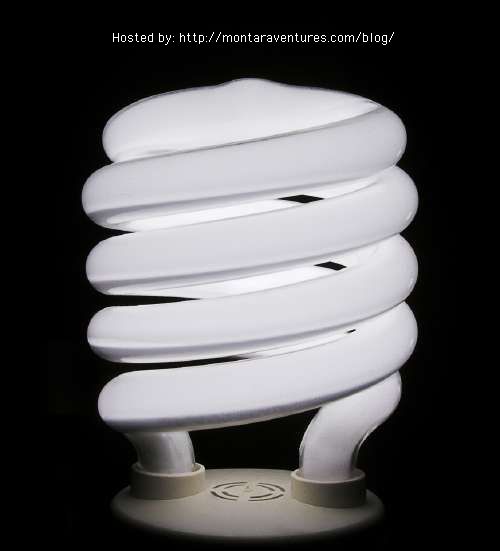
I had heard about Earth Hour but didn’t quite remember when it was. On Sunday morning, the power went out in my neighborhood for about three hours: I thought Hydro was enforcing Earth Hour by shutting off the grid. In the end, my husband drove our 12-seater van to the nearest McDonald’s for coffee and breakfast. How ironic. We burned fossil fuel to buy non-fair trade coffee at McDonald’s of all places, but didn’t turn on a single light bulb. We felt quite righteous.
In any case, I have been reflecting on whether or not we should all live like Ethiopians and the difficult issue of taking the so-called moral high ground in matters of environment when our excesses ruined it for developing nations. I just feel squirmy when I hear gainfully employed urban-dwellers complain about everything that made their enviable situation possible. But I digress.
My husband and I are in the process of having our basement finished. It wouldn’t be worth a blog entry but for the combined occurrence of Earth Hour and the spilling of our basement’s content into our family room. All I will say about that is “Man, that’s a lot of Stuff!” Still, we manage, through regular purges and careful spending, to keep our Stuff within the square-footage of our suburban family home. Meanwhile, in a nearby business park, a monstrous self-storage facility is emerging. With drive-through capabilities. I can’t help but shake my head in disbelief when I think of the Earth Hour gushing I heard today – “… saved enough power to take Ottawa and Guelph off the grid!” – while our ever growing urban-sprawl boxes are no longer big enough to contain all the Stuff required by the Good Life. We now need to build storage facilities on what used to be prime agricultural land, drive our Stuff there and pay good money so our Stuff will have a decent place to call home. In the meantime, we turn off the energy-efficient light bulbs in our McMansions for an hour and get to feel like a Friend of the Earth.
I don’t know. It just doesn’t do it for me. (It didn’t do it for this guy, either.)
Feeling crowded since 1969
A Quebec current events show, Il va y avoir du sport, recently hosted a debate asking: Must the number of births be limited to save the planet?
Doing my best to translate:
In 2009, or perhaps sooner, planet Earth will be home to 7 billion people.
For several decades now, we’ve been wondering if our planet will reach its limits. How many human beings can the world sustain?
Laure Waridel, author and environmental sociologist, pointed out that the resources we consume on a return flight to Paris are equal to what an Ethiopian person consumes over 12 years. Host Marie-France Bazzo therefore asked, “So we should all be living like the Ethiopians?”
Yes, that’s exactly what she meant (duh.)
By the way, in response to the question, “how many humans,” we apparently exceeded the planet’s optimum capacity sometime between 1969 and 1987, according to the World Health Organization.
Freedom of speech on campus, again
Campus pro-life groups do the Genocide Awareness Project across North America. But in Calgary, the University of Calgary is asking students to turn the display inward so that no one can actually see it. Today students decided they would defy the university and do the display their way, anyway. The point in all this is the administration’s hypocrisy–for how many other issues would they allow the signs to stand?
Ultimately, this sort of censorship shows the culture thinks abortion is compassionate. And when we are all hit with the reality that it is not, there is a backlash. A choice it is indeed–just a bloody and macabre one.
_________________________________
Update: UofC tells students they are trespassing on their own campus. Read about it here.
Sex-ed in the 21st Century
My children Liesl, Kurt, Martha and Brigitta are sitting silently in the dentist’s waiting room, filling-out their health questionnaire. Kurt glances up and asks the million dollar question every parent dreams of being asked in public:
“Mommy, what are Cialis and Viagra?”
Me, clearing my throat, thinking very fast: “Drugs. You aren’t taking any.”
Kurt: “What kind of drugs?”
Me, thinking very fast at a G-rated explanation of erectile dysfunction: “They’re for adult males who have sexual problems.”
Liesl: “Gross…”
Martha: “What are adult males? What sexual problems?”
Me: “Males about the age of Daddy?”
Brigitta: “Daddy has sexual problems?”
Liesl: “Oh, look at the time…”
Me, looking at the receptionist in despair: “Isn’t one of the kids due for a cleaning right about NOW?”
Sex-ed in the 21st century: it’s all about opportunities. They are literally everywhere.
A bizarre cult
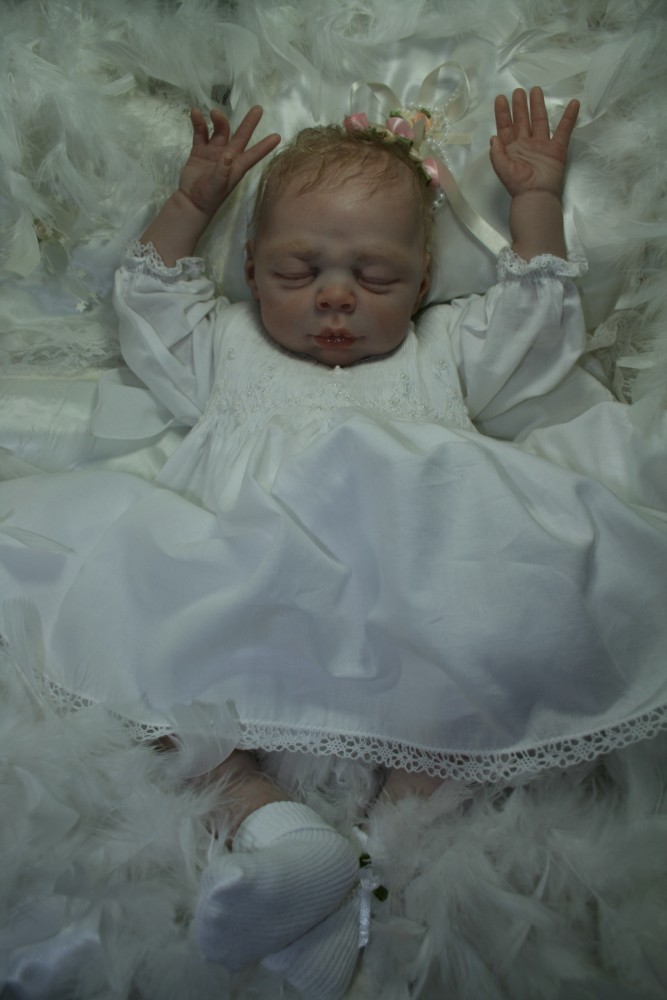
Just stumbled across this article on “reborn babies”.
Reborn dolls look, feel and smell just like real babies. They look so realistic, in fact, that they are often mistaken for the real thing. Every aspect of their anatomy has been carefully constructed to imitate the experience of looking at and holding a baby. The dolls are painted with the same slightly blotchy colouring noticeable on a very young infant. Their bodies are stuffed with sand or silicone so that their legs, fingers, head and hands have the same floppy weight as that of a small newborn baby. They even have the same neck-support issues, so that anyone picking one up will instinctively support the head.
“My daughter, who is a neonatal nurse, finds them eerie, scary because they are too lifelike,” says Martha Englishman, who is retired and has five reborns, partly because she has always collected dolls, but also to compensate for not having any grandchildren. “It sounds crazy, but I love them. They are the next best thing to having a baby.
To call this stuff disturbing is quite the understatement. The models whose eyes are closed look exactly like dead babies. (The ones that are meant to look “alive” don’t look much better to me; the internet is full of sites showcasing these things – here’s one I picked at random.) And what’s with calling them “reborn”? Somebody, please, explain this to me…
_________________________
Tanya adds: http://www.channel4.com/video/my-fake-baby/series-1/episode-1/living-doll_p_1.html
Watch your language, part II
I am a bit of a stickler for how we use words, especially in the context of hot-button issues like euthanasia and assisted suicide. We can’t settle these issues without debating them and we can’t debate them if we are not talking about the same thing. In an otherwise excellent article in this morning’s Ottawa Citizen, Naomi Lakritz writes:
The killing of Tracy Latimer was not euthanasia. It was murder. Euthanasia is also known as assisted suicide. Tracy did not commit suicide, let alone ask for assistance in doing so.
True, but euthanasia is not also known as assisted suicide, at least not in today’s academic literature in bioethics. With assisted suicide, a physician provides the means or information necessary for a person to end his or her own life. Physician-assisted suicide (PAS) also describes situations like Sue Rodriguez’ where the patient is able to express a desire to end his or her own life but unable to perform the required actions. Suicide is no longer criminal in Canada and the sticky issue with PAS is whether or not physicians should be allowed to facilitate it. Another sticky issue with PAS lies in the validity of someone’s desire to die. Is it a desire to die or a fear of suffering?
Euthanasia refers to the termination of someone’s life by another for the purpose of ending that person’s suffering. Accordingly, if PAS is technically suicide, euthanasia is technically murder and both should be debated as such. Suicide is legal in Canada but assisted suicide is not. Accordingly, we oppose PAS by arguing that the presence of a third party no longer makes it a private decision. Since euthanasia is murder (or at least should be), we oppose it by arguing that disabled life in any way, shape or form, is as valuable as another. One of the sticky issues with euthanasia is precisely the lack of active involvement in the decision by the person whose life is to be ended. That person may have expressed a desire to be “euthanized” in the past, but the actual life-or-death decision is made by an external party. This is in great part why the Latimer debacle is so worrying for disabled Canadians: once you let able-bodied people decide what a life worth living is, you eliminate the experience of disability from the decision-making picture.
All this to say, both are wrong for similar reasons. But that doesn’t make them synonymous.
What do you call the fear of tokophobics?
I almost hate to draw attention to this article (it was in the weekend’s National Post too). But someone else drew it to mine, and I’d like to share the pain. “Tokophobia” is the name of a “disorder”–those women who are apparently morbidly fearful of childbirth. I am now myself quite fearful of these women who claim this illness as their own, and wondering when a psychological association will acknowledge my personal distress officially.
At first as I read, the author had my sympathy. But then I read on. She cites her friends who have had horrible childbirth experiences: “‘It’s a conspiracy,’ she said. ‘Nobody tells you, nobody prepares you for what you go through. If they did, the human race would die out.'” I juxtapose this with my many multiple friends who are having children right now–though they are all great people, none are superheroes–and not one had such a thing to say about her experience giving birth. The author goes on to say this:
And yet, my terror of the process didn’t make me careful about contraception. Instead, I played fast and loose. …In fact, I have been pregnant twice, once in my 20s, and again when I was 30. Both ended in terminations.
and this:
I know I want my own biological issue. The extraodinary all-consuming love that a mother has for her child fascinates and appalls me in equal measure. If I could be spared the pain and just be handed a baby, would I sign up? Now I am in my early 40s when the dangers and complications for mother and baby multiply, and it would be so much easier just to close the door on the matter. But as long as I think there is a prize worth walking throught fire for, then there is torment.
Well, so long as she knows what she wants–which is apparently her own biological issue as some sort of prize. But just so long as that prize doesn’t come at any personal expense. Less like childbirth, more like winning a huge stuffed dog at a fair, after playing the beanbag toss.
_________________________
Brigitte is chuckling: “But as long as I think there is a prize worth walking throught fire for…”? Like, say, the amazing if painful miracle of childbirth? Gosh, these women. They “intellectualize” things so much they end up making hardly any sense at all.
_________________________
Tanya wonders: So, this tokophobia, is it the social equivalent of homophobia? Should we stare down our noses at her and say, “You’re such a tokophobic!” Or is she drumming up sympathy for a mental disorder (in which case we need to pull out the ‘tolerance’ card)? Keeping up with the latest politically correct trends is very exhausting!
_________________________
Véronique adds: I became acquainted with tokophobia in the process of writing this article. (Some argue that women who suffer from tokophobia should be allowed to request cesarean sections without a medical reason). Like all phobias, tokophobia is not rational and difficult to understand for those who do not have the condition. However, just like 3 of my children are “deathly allergic” to red peppers, all women who claim tokophobia are not clinically tokophobic. Having given birth five times without drugs, I speak with some authority when I say that childbirth is not a walk in the park. A dislike for the idea is not a phobia, nor is looking at childbirth with apprehension. Both are normal emotions that can be dealt with through support and preparation.
This reminds me of both abortion and assisted suicide arguments. In the case of abortion, a woman faces a crisis pregnancy. Instead of helping her get rid of the crisis, we help her get rid of the baby. In assisted suicide, a patient who is suffering is hopeless to the point of wanting to die. Instead of helping the patient with the pain and the hopelessness, we help the patient end his life.
Tokophobia and other non-clinical expressions of fear of childbirth should be treated as such. The problem is the fear, not the baby or the process of childbirth.
New comments page up
New comments are up for this week. Read them, here.
- « Previous Page
- 1
- …
- 65
- 66
- 67
- 68
- 69
- …
- 93
- Next Page »