Get your tissues ready.
[youtube:https://www.youtube.com/watch?v=MPnpSaFtBaA#action=share]

Get your tissues ready.
[youtube:https://www.youtube.com/watch?v=MPnpSaFtBaA#action=share]
This is “Canada without abortion, by choice.” So there’s some libertarian in me. You can not care for laws on abortion and still be profoundly against abortion, campaigning against it in the culture and with your friends.
This libertarian moment comes courtesy of a different story. Don’t bother clicking on the link unless you feel you must. It’s the story of a porn star in Gatineau, who had sex with 25 men in one night to pay for breast implants. The mayor of Gatineau was perplexed about this, and tried to stop the event.
To which the “adult entertainer” responded as follows:
He called the cops. He called everybody, but he couldn’t do anything. We know the law. We respect all the law,” de la Seine said. “We deal with Bell, we deal with Videotron, we deal with Telus because we are a supplier of porn movies for TV stations. And every movie we do has to have the stamp of the CRTC, so we can’t just do wrong things.”
So the CRTC approves? Why didn’t you just tell me that? Clearly, you “can’t just do wrong things.” Forgive me for thinking you were a greasy, conscience-free, selfish lech. I was wrong. You deal with Bell and Telus and, wait for it, the CRTC.
The only thing worse would be to be one of the mealy-mouthed bureacrats on the CRTC panel.

War, death penalty, assisted suicide, abortion–these are all what one calls conscience issues.
Pursuant to Order made Tuesday, June 16, 2015, the House proceeded to the taking of the deferred recorded division on the motion of Mr. Komarnicki (Souris—Moose Mountain), seconded by Mr. Payne (Medicine Hat), — That, in the opinion of the House, all Members of Parliament should be allowed to vote freely on all matters of conscience. (Private Members’ Business M-590)
Harper allows for conscience rights by never allowing any MP to raise the issue:
As you know, in our party, as in any broadly based party, there are people with a range of views on this issue,” Harper said. “But I think I’ve been very clear as party leader.… As long as I’m prime minister we are not reopening the abortion debate.”
The NDP–ever so open to conscience here, too:
The NDP believes that “it’s not debatable, it’s not negotiable, it is a woman’s right to determine her own health questions and her own reproductive choices,” Mulcair said.
And no one can forget this from Justin Trudeau:
Justin Trudeau paused, looked over the heads of reporters, and started to respond three times before finally spitting out the surprise announcement that Liberal MPs elected in 2015 would be expected to vote against putting limits on abortion.
I suppose the only way to vote for conscience rights and then be stridently pro-choice is to ensure no pro-lifer ever enters your party. And if they have a change of heart while sitting as an MP, then you boot them out or shut them up. Conscience rights. What does that even mean? I suspect these days, there are a great many people who believe it means not entering politics.

On aborting babies who may have Downs Syndrome:
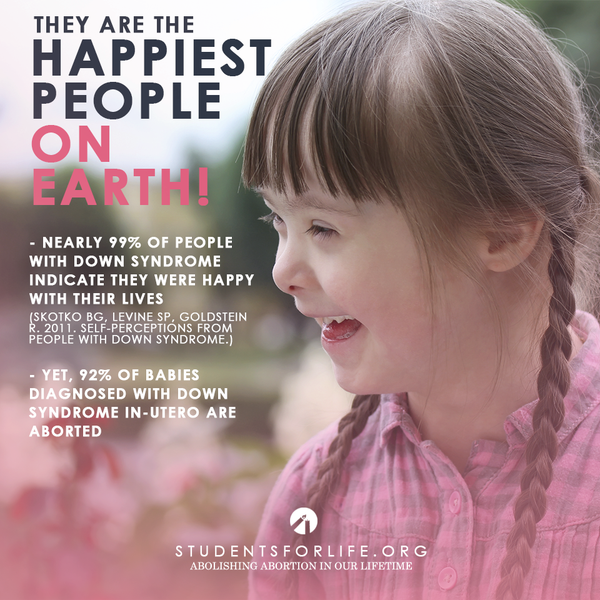
If we allow our governments to set up health programs that result in the systematic elimination of a group of people quite happy being themselves, under the false pretense of women’s rights, than that is a personal choice — one we have to face honestly.
I’d add this though. All abortion is done under the false pretense of “women’s rights.” There are far too many strong, unequivocally vibrant, ambitious, hard-working and equal women who are pro-life to pretend otherwise.

Think that abuse of the elderly won’t happen if assisted suicide or euthanasia are legalized? Think again. Even with laws that prohibit doctor assisted death in most countries of the world, abuse of the elderly is a significant problem
The study titled Elder Abuse: Systematic Review and Implications for Practice was published in the Journal of the American Geriatrics Society, 2015. Science Daily publishes the study here. It reveals that globally, elder abuse is epidemic and is most common among community dwelling elderly and those with cognitive and physical impairments or psychosocial distress.
Elder abuse, which includes psychological, physical, and sexual abuse; neglect; and financial exploitation is highest in some European countries like Croatia (61%) and China (36%) and lowest in Ireland (2%) and India (14%). In North and South American the epidemiological studies revealed that the prevalence of elder abuse ranged from about 10% among cognitively intact older adults to 47% in older adults with dementia.
Lead author of the study, Dr. XinQi Dong says, “The epidemics of elder abuse and our societal inability to sufficiently protect the most vulnerable population are only compounded by their increased risks for premature death, psychosocial distress, use of emergency departments, hospitalization, and nursing home placement.”
In Canada we will soon add to this list the subtle pressure on elderly patients to end their lives due to the burden they place on others.
photo credit: Romanian Old Man via photopin (license)
The abortion debate really need not be a battle between the right and the left. The lot of us agree on human rights, and a segment of the population believes human rights should begin when human life begins. Polls show that most Canadians, both those who situate themselves on the right and the left, want restrictions on abortion access in Canada. I think we have more in common than not.
This writer shares that her mother found herself pregnant in college and that…
Given the information she had at the time, given the fact that she was so close to finishing school, and given MY secular, liberal worldview… I have no doubt at all that if I had been my mother, there would have been no me.
Something to consider, isn’t it? Yet the writer seems to remain pro-choice.

Changing someone’s mind on abortion is hard. There are parallels to the level of emotion in the vaccine debate. I received this article about a mom who changed her mind about vaccines and I thought there are some takeaways here for the business of discussing abortion.
My personal takeaways in talking with folks? 1) Avoid sarcasm. 2) Avoiding sarcasm means avoiding discussing with certain people who default to it so readily that they don’t have an open mind for discussion and will quickly suck you into the sarcastic abyss, which quickly leads to anger. Perhaps it starts with anger, I’m not sure. 3) Once you’ve decided who you will discuss with–and preferably it’s someone you know well, who you genuinely love in all ways,* always consider you could be wrong. But always consider you could be right, and the person you are talking with is sensible. 4) Finally, never expect a conversion right there. People take time.** If that person is me, they take a very long time to ruminate, go back and forth, consider the other side. No one, I’ve decided, will ever listen to my pro-life spiel and then say right in front of me, you know, you are right. I’ve invested myself in a flawed worldview, but today, all that is going to change.
Bold is mine.
When you changed your minds about vaccines do you think (honestly) there was anything anyone could have said to you to change your mind?
Maybe? How they approached me would have made a huge difference. Respectfully validating and addressing versus sarcastically dismissing my concerns and questions would have made a difference. Building our trust through caring, patient dialogue would have helped. Just talking to me at all like an intelligent caring person would have helped.
If someone had said in a genuinely kind tone. “Tara, you are a great mom who loves her kids dearly. I know there is so much confusion about vaccines. I care about you and want to help you make a informed decision you feel really confident in. Would you be willing to share some of your concerns with me so we could go through them one by one? In the end it’s your decision.*** I want to make sure you are totally confident in your decision since it’s so important.” I would like to think I would have stepped willingly into that kind of conversation. There was no threat or attack that would trigger defensiveness.
*This is what makes social media a bad forum for just about any genuine attempt at conversing. Everyone, at one point or another, ends up sounding shrill on social media. All it takes is one bad moment and you’ve done the Facebook post, and it’s all over for civil discourse.
**People do take time, and this is why I find strident pro-choicers to be false friends to a woman in need. We all need time to make good decisions. We all, I think, go back and forth with our decisions. Unplanned pregnancy does not allow for this. You can go back and forth, back and forth, but if you choose abortion, it is final and there is absolutely no undo button. If you choose life, can you decide not to parent? Absolutely. But if you choose abortion, you don’t ever get to reconsider. It’s cruel and the main problem is that a woman never knows whether she will be the one to mourn or regret her decision until it is all over. Some women don’t regret it. Hurray for them; it appears they all run for politics and make their point of view sound super mainstream. For the woman who does regret it, and lives a cycle of depression and pain for many years, well, strident pro-choicers have no answer for this and appear not to care, beyond blaming me for “creating stigma.”
*** This makes pro-lifers intensely uncomfortable. Do I wish abortion were not a choice? Absolutely. Is it available as one? Absolutely. We have clinics that are readily available and your loved one contemplating abortion does not need to talk to you first before she goes and books herself in. I don’t have time to go into the implications of what this actually means in practically attempting to counsel someone out of abortion, however, I do know mentioning that mothers make a choice for or against abortion is a sticking point with some pro-lifers. The mere fact that I acknowledge the facts on the ground leaves some pro-lifers wondering if I am actually pro-life. Frustrating, that.

I haven’t blogged much lately. My mat leave ended in March, I started a new job as Executive Director of Canadian Physicians for Life on March 30th, and I’ve been trying to get used to my new life circumstances. I’m working from home, which permits me to be around my son all day long. I feel pretty lucky. These are pretty much my ideal circumstances.
But my PWPL blogging has been light. I hope to remedy that in coming weeks. I’m just struggling to find a new rhythm.
I attended the Christian Medical and Dental Society conference this weekend in Calgary. It was an amazing conference attended by passionate, pro-life physicians. I heard all kinds of inspiring stories. A couple shared how they have been serving in the pro-life movement together for 50 years. One physician shared how she had been attacked for her beliefs. Another shared how he served his patients to the best of his abilities while abiding by his conscience.
I respect these physicians more than they’ll likely ever know. I can’t imagine how tough the schooling and residencies must have been. (In fact, I spent a lot of time asking them how they did it. With my health limitations, I would have never survived either.) Being a physician is a hard calling, I imagine, but it’s a beautiful one. And now, with their professional regulatory bodies stripping them of their conscience rights, these doctors face additional challenges. I’ve prayed for pro-life physicians for years, and I’ll continue to do so.
I had a moment to share my heart with them during the conference, but it wasn’t quite enough to express my deep gratitude. I wanted to tell them that their courage and commitment to the sanctity and beauty of life – of all lives – emboldens myself and others to commit ourselves further to this fight to protect life.
In September, Ann Voskamp wrote the following words, which I’ve copied into my prayer journal. I’d love to share these words with Canada’s pro-life physicians:
You can hear it about this time of September, breathing warm courage into our exhausted places: “Just Call to Me. I guarantee I will answer you. I will make you strong & brave.” (Ps.138:3)
Be Brave. Hold out your Light to hold back the flood of dark.
Be Brave. Your bravery wins a thousand battles you can’t see because your bravery strengthens a thousand others to win their battles too.
Be Brave. And do not pray for the hard thing to go away. But pray for a bravery to come that’s bigger than the hard thing.
Be Brave. There are angels closer than you know.

Thank you, pro-life physicians, for abiding by the Hippocratic Oath, for respecting life and being willing to fight in order to protect it. Thank you for your courage. Thank you for being brave.
photo credit: August Moon via photopin (license)

The Dying with Dignity (DWD) poll was quoted, yet again, in this article that appears to make it look like Catholics are divided on the issue of assisted suicide. While Catholic leadership my differ on strategy when it comes to handling this catastrophe brought about by our Supreme Court, they do not differ, as the title suggests, on the issue.
That said, I am really tired of seeing this short-sighted DWD poll on assisted suicide being lauded as an absolute authority.
LifeCanada has for years, since 2002 to be precise, polled Canadians on the “life issues.” In 2009 we began polling on the issue of assisted suicide and euthanasia, and our results have been consistent over the years. High percentages of Canadians are either concerned or “very concerned” about the possible abuse of the vulnerable, should legalization occur.
Unless one is prepared to ask the hard questions, people come away with a rosy-coloured picture of the issue. The DWD supporters clap each other on the back at the prospect of introducing ‘doctor death’ into our healthcare system with nary a thought to the possible consequences.
Are Canadians concerned that the vulnerable will be pressured to end their lives? Are they concerned that those with suicidal tendencies will not get the help they need? Are they worried for themselves, when they become elderly, alone and an expense to the health care system? Are they worried that objecting physicians will be liable to professional discipline or censorship? The answer is a resounding “yes”.
In 2013 LifeCanada and the Canadian Institute for Education on the Family sponsored an 11-question poll that focused exclusively on Quebec. This poll conducted by Abingdon Research, was commissioned just before Bill 52 was legalized in the province, allowing euthanasia in Canada for the first time.
We wanted to know if citizens of Quebec knew what the term “medical aid in dying” meant, because that was the terminology being thrown around in the Province at that time. We also wanted to know what their support for euthanasia was before we asked the hard questions and after.
The results were that “less than a third (31%) correctly know what the phrase “medical aid in dying means. Nearly a third (27%) think it is some sort of palliative care. This is a term that gains the concept more support.”
When asked without any definition of the concept if they supported “medical aid in dying” nearly three quarters (74%) supported it and only 12% opposed it.
When asked if they support it after a balanced description of Bill 52, there is only a tiny shift away from support. Support drops by 2%, but opposition grows by 5% to 17% overall.
As an aside, when given the two options of “pain relief” or “lethal injection” and asked what the priority for the health care system should be, 57% said pain relief.
But the really hard questions involve precisely the reasons why assisted suicide has always been prohibited.
And here is the clincher: After being exposed to the list of concerns, respondents were asked again what they think Quebec’s government should do about “medical aid in dying.” They were given the choices of legalization, not letting it be legalized and sending it for further study. “A strong plurality (47%) believed it requires further study,while only 35% believed in legalization.”
Ultimately the questions around assisted suicide and euthanasia should be about the effect of such a law on the vulnerable, the aged, the disabled, the mentally incompetent. Will their lives be protected? Will they be able to fend for themselves in a medical culture that offers death as a remedy to suffering?
It is appalling that Dying With Dignity never even raises the issue. Where is their concern for these huge segments of our society?
The following is a press release I got from NCLN, re-printed in full. Consider supporting their case if you can.
_____
FOR IMMEDIATE RELEASE
RYERSON PRO-LIFE STUDENTS PREPARE LAWSUIT AGAINST STUDENT UNION
JUNE 9, 2015. TORONTO, ON—On February 23rd, the Ryerson Student Union (RSU) Board of Directors unanimously voted that Students for Life at Ryerson (“SFLR”), a pro-life club at Ryerson University, would not be allowed to form a pro-life club under RSU. This vote marked the last step in an appeal process that began in the fall semester after SFLR was rejected by the Student Groups Committee on the basis that the RSU, “opposes…groups, meetings, or events that promote misogynist views towards woman [sic] and ideologies that promote gender inequity, challenges women’s right [sic] to bodily autonomy, or justifies [sic] sexual assault”.
“Our club stands for human rights for all human beings, including those at the earliest stages of life. We also want to support pregnant students on campus who want alternatives to abortion,” states Carter Grant, a second year business major and Vice-President of SFLR.
Pro-life students at Ryerson were first denied club status back in 2003. Now students are preparing to take the decision to court to assert their right to be treated fairly by their student union, and to not be discriminated against on the basis of their pro-life viewpoint.
The students’ case has been taken on by Charter Defence, a new pro-bono legal defence organization. It has retained experienced constitutional lawyer Carol Crosson to defend the students. Ms. Crosson says that, “pro-life students have been denied rights on campuses long enough. This is the time to end this battle and enshrine students rights on campus.”
However, there is one thing stopping these students. Ms. Crosson explains, “sadly, standing up for your rights often requires money. Charter Defence is graciously covering legal costs, but during the trial or afterwards costs may be awarded against the students.”
Nicholas McLeod, who sued Carleton University on a similar conflict about student rights, states that “we were forced to give up continuing our fight because we had to pay costs to continue. We were not able to and were forced to give up. I want these students to succeed.”
“The students need to raise $20,000 by the middle of July to be able to initiate this case”, Ms Crosson says. “If these students win, it means a win for all pro-lifers. It means that other students in ON will have a legal leg to stand on when their universities and student unions treat them unfairly. It means that bureaucrats in other arenas will take notice that pro-lifers are not easy prey. Let’s help these students win.”
Donations are processed through Charter Defence. Please see donation information on their website, charterdefence.com.